When a storm hits after dinner or a heavy limb splits at dawn, the clock does not matter. The weight of wood, the leverage of wind, and the proximity to roofs and wires decide the timeline. An after-hours emergency tree services hotline exists for exactly that window, from the first crack you hear to the moment a crew can secure the site. Over the years I have taken hundreds of these calls. The best nights end quietly, with a temporary brace holding, a tarp secured, and everyone safe. The worst nights are the ones where someone tries to handle a snarled branch with a chainsaw in the rain. The difference usually comes down to preparation, judgment, and speed.
This guide explains what to expect when you call after hours, how professional crews triage and stabilize hazards, and where specialized skills like Tree Cable and Bracing, Dangerous Tree Assessment and Removal, and FireSmart Tree Services fit into urgent decision making. If you only take one thing away, let it be this: trees behave predictably under professional observation, yet unpredictably under tension, rot, and wind. A calm voice on a hotline can save a roof and sometimes a life.
What happens when you dial after hours
The line rings to a trained coordinator, not a generic answering service. We start with four questions because they determine dispatch speed and equipment selection. First, is anyone injured or trapped. Second, are there downed or sagging power lines. Third, what is the tree position relative to structures, traffic, or access routes. Fourth, what is the weather doing over the next hour.
If there are power lines involved, we loop in the utility immediately. That is non-negotiable. Tree crews cannot de-energize lines, and even a line resting quietly on a trunk can become lethal if electricity backfeeds. In many jurisdictions, utility response dictates when we can make contact with the wood. Expect a dual response pattern in those cases, with utility and tree service arriving in coordination.
For non-electrical hazards, the coordinator assigns a lead arborist and a two to four person crew. Night operations usually run lean but specialized. We prioritize a climber with aerial rescue training, a ground lead fluent in rigging under limited visibility, and a chipper operator who can double as a sawyer. Equipment includes a small crane or hiab if access allows, one or two aerial lifts, portable floodlights, a winch, low-stretch rigging lines, wedges, and a saw kit with bar lengths matched to the trunk diameter we expect. We also carry tarps, roof anchors, and temporary braces for fence and porch protection.
Travel time varies with weather, distance, and road closures. In dense urban zones the average after-hours response lands in 45 to 90 minutes. In rural areas count on 60 to 120 minutes. The coordinator stays on the line as needed, updating you on estimated time of arrival and answering safety questions.
Knowing when it is urgent
Trees are resilient, but some signals do not wait for morning. I coach homeowners and property managers to listen for sound and to watch for geometry. Cracking or popping means fibers are separating. A leaning trunk that has shifted from morning to evening suggests root plate movement. Soil heave on the side opposite a lean points to partial uprooting. If the crown touches a roof, even lightly, that contact can grind shingles and break branch unions as wind escalates.
Five triggers justify an immediate call to the after-hours hotline.
- A tree or large limb has contacted your home, garage, or vehicle, or is suspended above them with visible cracks or torn bark. Movement at the base or fresh soil mounding around the roots, especially after heavy rain or rapid snowmelt. Any tree interacting with power lines, service drops, or a service mast, even if the power seems on or steady. Storm damage that has split a trunk, peeled back a codominant stem, or left hanging branches that overreach a walkway or entrance. Fire exposure near the dripline, ember cast in the canopy, or a smoldering stump after a wildfire front has passed.
That last point surprises people. In fire country, trees can hold heat or ember pockets that reignite dry duff. FireSmart Tree Services adapt to that reality, incorporating inspection, targeted pruning, and debris removal that lower flame height and reduce ladder fuel. After a wildfire, we also assess bark scorch, cambium damage, and root viability before deciding whether a tree stays, gets reduced, or requires full removal.
The first five minutes on site
Night work begins with a quiet walk and a flashlight held at shoulder height, not at the eyes. Looking up with your headlamp draws bugs and blinds you. We start by identifying the load path, then a safe zone for the crew and for you. If the site is still shifting, we bring in wedges or ratchet straps to hold a torn union while we set primary rigging.
Stabilization comes before cutting. On a roof, we often set roof anchors and a temporary ridge beam prop to unload a sagging limb. On the ground, we may drive two to four deadmen anchors and run low-angle lines to keep a partially uprooted tree from rolling. When a vehicle is pinned, we avoid cutting above the glass line until we have controlled movement at the trunk or main limb. Chainsaw chips can damage windows, and spring-back can dent panels if force is not neutralized first.
Photography helps with later insurance documentation but not at the expense of safety. Keep a respectful distance from the crew. The circle of danger around a saw in the dark is wider than you might think.
Certified arborist judgment in the dark
An emergency is not a license to ignore arboricultural standards. In fact, the standards matter more after hours when fatigue and poor visibility can push people toward quick, risky shortcuts. A Certified Arborist Consultation on site sets the tone. The arborist looks for decay, fracture lines, fiber buckling, and hidden hazards like metal in the wood. A trunk that looks solid by flashlight can ring hollow under a mallet. A limb that seems stable can be trapped under compression and explode outward when you nick the wrong side.
Good arborists also protect your tree if saving it is reasonable. A torn limb on an otherwise healthy oak might tolerate reduction pruning and cabling once the hazard is down. Splitting codominant leaders can sometimes be addressed with Tree Cable and Bracing installed to ANSI A300 standards, using extra-high-strength cable and properly sized lag or through-bolts. After-hours, we might install a temporary soft sling to relieve a union, then return for permanent hardware with daylight and a second climber for redundancy.
Dangerous Tree Assessment and Removal under pressure
Some trees cannot stay. A root plate that has rotated more than 10 to 15 degrees from vertical usually signals systemic failure. Ganoderma or Armillaria fruiting bodies at the base indicate advanced decay. Carpenter ant frass at the trunk flare suggests hollowing. When those signs appear near living spaces, we pivot from salvage to Dangerous Tree Assessment and Removal.
Removing a failed tree at night requires more choreography than a daytime take-down. We pick smaller sections, set redundant lines, and accept slower progress in exchange for control. In tight urban lots, I have used a compact crane rated for 3 to 6 tons at short reach to lift pieces cleanly over home additions. In rural sites, we sometimes need to build a temporary access path with matting to keep the truck from sinking. The crew constantly recalculates the drop zone because shadows and yard clutter hide hazards like landscape lighting wires, sprinkler heads, and decorative rock that can bounce a log.
If the tree has crushed a roof, we remove weight systematically, then tarp and batten the opening to shed water. Snow complicates the math. A foot of wet snow adds 15 to 25 pounds per square foot. On a 400 square foot roof section, that is three to five tons before you account for a tree. We pull snow when we can do it safely, both to protect the structure and to get to sound footing for the crew.
Tree Removal Services, then stump decisions
Once the immediate danger passes, homeowners often ask about full Tree Removal Services. The answer depends on residual risk, site goals, and budget. A tree that lost a third of its crown in a wind event may survive, but with a disfigured canopy and higher failure risk during the next storm. If the species is prone to decay at large pruning wounds, like silver maple or willow, removal and replanting might serve you better than heroic pruning.
Stump management follows. Stumps left tall can be hazards for snowblowers and ankles. Stump Removal & Grinding usually means a machine that chews the stump and major roots to a depth of 6 to 12 inches. Deeper grinding is possible but costs more and can destabilize nearby paving. In tight beds with irrigation lines or shallow utilities, we map before grinding. If you intend to replant, we recommend moving a few feet off the original stump, especially with oaks and pines whose old roots host fungi that can challenge saplings.
On insurance-driven projects, we separate emergency stabilization from final removal and grinding. Insurers typically approve what stops further damage first, then adjusters sign off on permanent work. Clear, timestamped photos, crew notes, and https://ameblo.jp/knoxurop788/entry-12966911575.html a diagram of the tree and damage area help the claim move quickly.
Pruning that prevents the next call
One side effect of night emergencies is that you get a fast education in structural pruning. Trees that fail in storms frequently share patterns: codominant leaders without a proper branch collar, long lever arms with weighted tips, overextended limbs above a roof, or included bark at unions. Proper Tree Pruning & Crown Shaping earlier in a tree’s life shifts those odds. Reduction cuts that bring leverage back to a subordinate branch, selective thinning to reduce sail, and subordinate pruning to favor a single leader all lower risk without turning a tree into a lollipop.
It matters who holds the saw. A trained arborist works to ANSI A300 pruning standards, cuts outside the branch collar to facilitate proper compartmentalization, and avoids unnecessary wound size. When clients schedule a Certified Arborist Consultation after a scary night, we often walk the property and flag three or four adjustments that materially improve safety without gutting the canopy. That kind of targeted work costs less than a crane at 2 a.m.
Temporary holds and permanent fixes
Not every emergency ends with removal. Sometimes a cracked union can be unloaded, cleaned, and retained with Tree Cable and Bracing. The decision matrix is simple but strict. We need adequate residual wall thickness, sound wood above and below the defect, and a species that responds predictably. With oaks and beeches we have better outcomes than with brittle poplars. Hardware selection matters. Extra-high-strength cable with properly swaged terminals, set at two-thirds the distance from the defect to the limb tip, resists storm movement without strangling the tree. Through-bolts beat lags in most large unions. After-hours we may place a temporary rope or soft brace to stop further tearing, then install permanent hardware in daylight when we can drill cleanly and align with the grain.
We also use non-invasive props for heritage trees with low limbs. A discreet post set on a buried footing under a sweeping branch saves a vista and prevents the repeated flex that tears fibers over time. These are the quiet wins that never make the news because nothing failed.
FireSmart thinking before the wind shifts
In regions that see wildfires, a hotline is not just for wind and ice. It is equally important when smoke blows in and embers ride the air. FireSmart Tree Services tighten defensible space without scalping the landscape. The goal is to keep flame on the ground from climbing into the canopy, and to keep a crown fire from showering your porch with embers. That means pruning ladder fuels up to six to ten feet, spacing shrubs, removing deadwood, cleaning gutters, and creating a non-combustible zone directly around the home.
During and after a fire event, we assess bark scorch depth with a simple knife scrape. Green cambium under scorched bark suggests recovery potential. Blackened, dry cambium around most of the circumference means the transport system failed. Roots boiled by superheated soil cannot support a standing trunk, even if the crown looks partially green. In those cases, we schedule Dangerous Tree Assessment and Removal quickly because wind can turn a weakened tree into a spear. Where trees can remain, post-fire watering and slow-release nutrients help, but not if the vascular system is cooked.
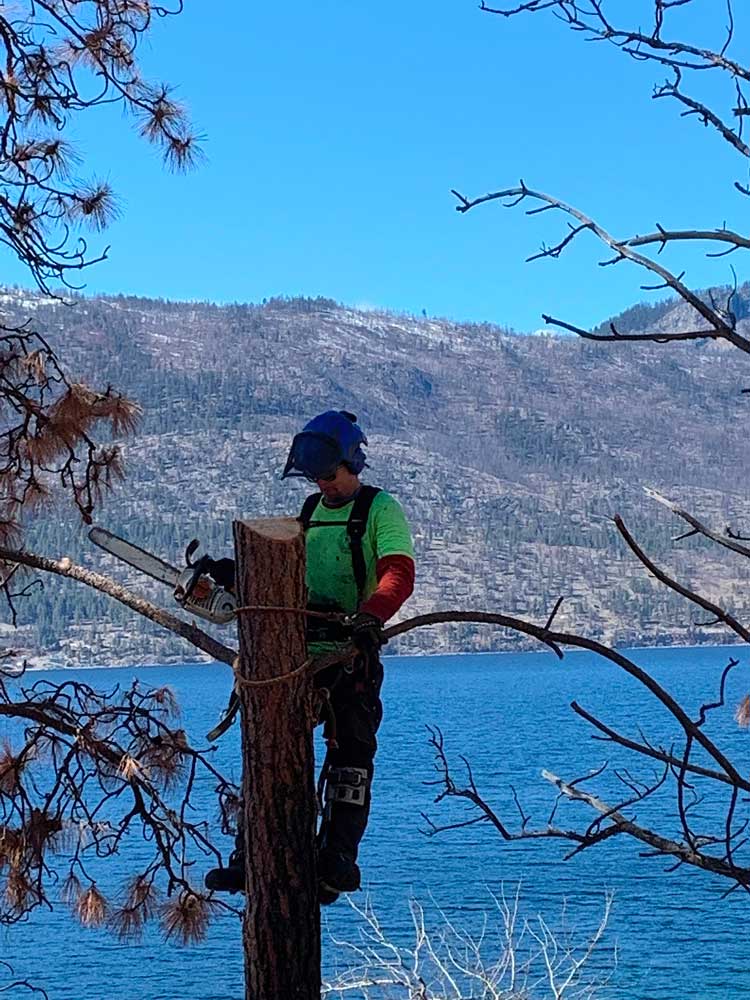
Working beside utilities and municipal crews
Nearly every serious night call touches the public right of way, whether through blocked streets, downed lines, or damaged sidewalks. Expect coordination. Our office keeps direct contacts with utility dispatch, municipal public works, and sometimes state highway responders. In a multi-block event, we follow a priority map: clear hospital routes first, then bus and emergency corridors, then residential loops with the worst hazards. If a tree belongs to the city, we document and hand off as required by local code. If the trunk is on your property but the crown fell into the street, we typically handle private removal and coordinate with the city for traffic control.
Traffic safety is not optional. At night we set cones, signs, and portable lights at proper spacing per MUTCD guidelines, with flaggers if sightlines are poor. I have turned away small operators who want to work in the road with nothing but a pickup’s flashers. The risk is too high.
Cost, authorization, and the midnight signature
Emergency work, like any trade that runs crews after hours, carries premiums. You are paying for readiness, overtime, and risk. A typical small stabilization call with minor cutting and tarping might land in the low four figures. Complex crane removals with utility coordination and multiple vehicles can run into the high four to low five figures. We quote ranges on the phone when possible, then give a tighter estimate on site before making irreversible cuts. Insurers often reimburse reasonable emergency mitigation, but coverage varies. Keep your policy number handy. Authorization typically comes from the property owner or manager. If a tenant calls, we still need owner approval unless there is an imminent life safety hazard.
Know that we stage work to keep costs controlled. First, we stop the damage. Second, we prevent secondary damage, like water intrusion. Third, we clear access. Fourth, we do full removal or pruning once the site is stable. Splitting tasks into phases helps you and your insurer see value at each step.
How to help before the crew arrives
Homeowner actions in the first half hour can lower risk without touching a saw. The right moves are simple, quiet, and aimed at distance, light, and documentation.
- Keep people and pets out of the drop zone, which includes the area under the tree and any rooms directly below a roof strike. Do not touch or approach any line. If a line is involved, wait in a safe area and call the utility with the hotline on conference. Turn off irrigation near the tree and, if safe, shut the breaker to circuits serving exterior outlets or lights under contact. Take a few well-lit photos from safe vantage points for insurance, then put the phone away and keep an eye on movement. Unlock gates, move vehicles if clear of the hazard, and secure dogs so the crew has quick access on arrival.
We add one more request on storm nights. If you have neighbors with similar issues, share the hotline number. Coordinated calls help us route crews efficiently, which shortens everyone’s wait.
Weather edge cases and odd hazards
Every few months we see something unusual that is common enough to mention. Ice storms turn branches into glass bars. Branches weighted with ice carry stored energy that releases unpredictably. Cutting without unloading weight gradually is a recipe for barber-chair splits and bounce-back. In heavy snow, branches that appear broken may be just bent. Sunlight can release them suddenly. We approach with poles and long tools before putting a person under a loaded limb.
Wind direction matters more than wind speed. A steady 30 mile per hour wind from a familiar quadrant may stress trees less than a 20 mile per hour gust from an unusual direction that finds weaknesses. Saturated ground converts a moderate breeze into a force that pushes entire root plates. After dry summers, first storms find deadwood that summer hides.
We also run into metal in wood. Old clotheslines, fence wire, treehouses, and long-forgotten lag bolts chew chains and deflect bars. Before major cuts, we scan with a metal detector and probe with a handsaw where practical. Sparks are a bad sign.
What you can expect the next day
By morning, the site should be quiet. Tarps are tight, braces hold, and debris is stacked or chipped. The lead arborist will schedule follow-up for permanent solutions. That might be final Tree Removal Services, clean-up pruning, or installation of Tree Cable and Bracing. If a valuable tree remains, expect a long look at structure in daylight and a plan that balances aesthetics with safety. That is where Tree Pruning & Crown Shaping shows its worth. Careful reductions on the windward side, a lighter load on overextended tips, and a saner clearance over roofs change how a canopy handles the next storm.
If the event revealed a pattern across your property, a broader Certified Arborist Consultation is worth the hour. We walk, measure, and flag adjustments. Sometimes FireSmart Tree Services also enter the conversation, especially where roofs meet conifers or where woodpiles snuggle up to siding. Small moves now beat another night call.
Why hotlines exist at all
You could leave a voicemail and hope the crew checks it in the morning. Many do. The difference a hotline makes is coordination. Weather stacks calls. A service that picks up, triages, and routes crews based on hazard level gets to life safety calls first, then to property protection, then to convenience. It also keeps you from improvising out of frustration. I have talked more than one homeowner back from a ladder and a handsaw at midnight. The relief in their voice when headlights finally wash over the driveway is the best part of the job.
And a final note born of practice rather than policy. Trees make homes possible. Shade cuts heat costs. Windbreaks protect roofs. Birds and insects depend on the canopy. The point of Emergency Tree Services is not to make yards sterile. It is to handle the moments when mass, leverage, and weather line up against you. With the right team on the other end of a phone, those moments become manageable, and the trees you keep become safer for years.
Services that connect to emergency response
People often discover our broader work through a 2 a.m. Call, then stay for planning and care. The same skills that secure a split limb also lift the look and longevity of a yard. Emergency Tree Services are obvious when something breaks. Dangerous Tree Assessment and Removal is the quiet version that prevents a break. Tree Pruning & Crown Shaping gives the canopy a structure that respects both the species and the site. Certified Arborist Consultation maps a path so maintenance fights entropy instead of making new problems. Tree Cable and Bracing preserves form when a union needs support. Stump Removal & Grinding removes the trip hazard and opens the ground to replanting. FireSmart Tree Services make sure your tree line protects instead of endangers when embers fly.
If you never need the hotline again, it will be because those other services did their job in daylight. If you do need it, you will know what to expect, what to do, and why the calm voice on the other end asks the questions they do.
Ace Tree Services Ltd.
Name: Ace Tree Services Ltd.Address: 4656 Wallace Hill Road, Kelowna, BC
Postal code: V1W 4C2
Phone: 250-212-9593
Website: https://acetree.ca/
Hours:
Monday: 7:00 AM - 5:00 PM
Tuesday: 7:00 AM - 5:00 PM
Wednesday: 7:00 AM - 5:00 PM
Thursday: 7:00 AM - 5:00 PM
Friday: 7:00 AM - 5:00 PM
Saturday: 7:00 AM - 5:00 PM
Sunday: Closed
Open-location code (plus code): RHF8+8G Kelowna, British Columbia, Canada
Map/listing URL: https://www.google.com/maps/place/Ace+Tree+Services+Ltd./@49.8232606,-119.4337283,659m/data=!3m2!1e3!4b1!4m6!3m5!1s0x537d8b1d074815c5:0x450b88afa7a41435!8m2!3d49.8232606!4d-119.4337283!16s%2Fg%2F11ydkpnh22
Embed iframe:
"@context": "https://schema.org", "@type": "HomeAndConstructionBusiness", "name": "Ace Tree Services Ltd.", "url": "https://acetree.ca/", "telephone": "250-212-9593", "address": "@type": "PostalAddress", "streetAddress": "4656 Wallace Hill Road", "addressLocality": "Kelowna", "addressRegion": "BC", "addressCountry": "CA" , "openingHoursSpecification": [ "@type": "OpeningHoursSpecification", "dayOfWeek": "https://schema.org/Monday", "opens": "07:00", "closes": "17:00" , "@type": "OpeningHoursSpecification", "dayOfWeek": "https://schema.org/Tuesday", "opens": "07:00", "closes": "17:00" , "@type": "OpeningHoursSpecification", "dayOfWeek": "https://schema.org/Wednesday", "opens": "07:00", "closes": "17:00" , "@type": "OpeningHoursSpecification", "dayOfWeek": "https://schema.org/Thursday", "opens": "07:00", "closes": "17:00" , "@type": "OpeningHoursSpecification", "dayOfWeek": "https://schema.org/Friday", "opens": "07:00", "closes": "17:00" ], "geo": "@type": "GeoCoordinates", "latitude": 49.8232606, "longitude": -119.4337283 , "hasMap": "https://www.google.com/maps/place/Ace+Tree+Services+Ltd./@49.8232606,-119.4337283,659m/data=!3m2!1e3!4b1!4m6!3m5!1s0x537d8b1d074815c5:0x450b88afa7a41435!8m2!3d49.8232606!4d-119.4337283!16s%2Fg%2F11ydkpnh22"
Ace Tree Services Ltd. provides professional tree removal, pruning, stump grinding, emergency response, and arborist consultations for properties in Kelowna and across the Okanagan Valley.
The company works with homes, commercial properties, and municipal settings where tree work needs to be planned carefully around buildings, fences, driveways, landscaping, and other site constraints.
Based in Kelowna, the team is positioned to help nearby neighbourhoods and surrounding Okanagan communities with routine tree care and time-sensitive storm cleanup.
Customers looking for careful tree work often want a crew with certified arborist training, insurance, and a methodical approach to higher-risk removals.
Services also include dangerous tree assessment, cabling and bracing, and wildfire risk reduction tree work for properties that need longer-term planning.
To request a quote or discuss tree care options, call 250-212-9593 or visit https://acetree.ca/.
A public map listing is available to help customers confirm the business location and get directions before a site visit or estimate.
For Kelowna property owners who need pruning, removals, or emergency tree help, a local tree service can make it easier to schedule site-specific recommendations and cleanup.
Popular Questions About Ace Tree Services Ltd.
What services does Ace Tree Services Ltd. provide?Ace Tree Services Ltd. lists tree removal, stump removal and grinding, tree pruning and crown shaping, emergency tree service, arborist consultation, dangerous tree assessment and removal, cabling and bracing, and wildfire risk reduction tree work.
Who does Ace Tree Services Ltd. serve?
The company describes its work as serving homes, businesses, and municipalities in Kelowna and across the Okanagan Valley.
Is emergency tree help available?
Yes. Emergency service is listed for downed or uprooted trees, dangerous tree assessment, stabilization work, and branch cleanup. If a tree is near power lines, the safest first step is to stay clear and contact the utility provider before any tree work begins.
Do I always need a permit to remove a tree?
Not always. Permit requirements can depend on where the tree is located and whether it is near a creek, lake, steep slope, or another protected area. It is best to check local rules for the specific property before removal work starts.
How deep does stump grinding usually go?
Standard stump grinding is typically described as going about 6 to 12 inches below ground level, which is often enough for grass or surface landscaping. Deeper grinding may be possible when site plans call for it.
How much of a tree can be safely removed at one time?
That depends on the species, age, health, and structure of the tree. In practice, good pruning is usually about removing the right limbs for health, clearance, and structure rather than chasing a fixed percentage.
What are common signs that a tree may be dangerous?
Large dead limbs, visible cracks, a new lean, root damage, canopy dieback, or storm-related damage can all be warning signs. Trees near structures deserve extra attention when any of those issues appear.
What is cabling and bracing in tree care?
Cabling and bracing are support systems used to reduce the risk of failure in trees with structural weaknesses that may still be worth preserving. They are generally used to add support, not to replace good assessment and ongoing maintenance.
How do I contact Ace Tree Services Ltd.?
Call 250-212-9593.Website: https://acetree.ca/.
Landmarks Near Kelowna, BC
Downtown KelownaThe downtown core is a practical reference point for lakefront neighbourhoods, mixed-use streets, and central residential properties. If your property is near downtown, tree pruning, removals, and cleanup can be planned around tighter access and nearby structures.
Knox Mountain Park
This well-known park north of downtown is a recognizable landmark for nearby homes and hillside properties. If you are close to this area, ask about tree assessment, trimming, or removal work suited to sloped sites.
Mission Creek Greenway
The greenway runs through several parts of Kelowna and is a useful landmark for nearby residential areas. If your property borders or sits near this corridor, site-specific tree planning is especially important.
Pandosy Village
Pandosy is one of Kelowna’s most recognizable neighbourhoods and a common reference point for south-central properties. If you are nearby, request help for pruning, removals, or storm cleanup around homes and small commercial sites.
Rutland
Rutland is a major east Kelowna neighbourhood with a mix of residential and local commercial properties. If you are located in or near Rutland, tree work can be scheduled for both routine maintenance and urgent situations.
Landmark District
This central business-focused area is a practical landmark for offices, service properties, and nearby residential streets. If your site is near the district, ask about careful tree work around parking, access lanes, and built-up lots.
Kelowna’s North End
The North End sits on the edge of downtown and is a useful reference for nearby homes, industrial sites, and commercial properties. If you are in this part of the city, request tree care based on the layout and constraints of the lot.
Airport District
The Airport District is a recognizable north Kelowna reference point for surrounding properties and access routes. If you are in this area, ask about tree services for residential acreage, commercial sites, or roadside cleanup needs.
Glenmore & Dilworth
These established Kelowna neighbourhoods are useful landmarks for central and north-central service calls. If your property is nearby, pruning and removal work can be tailored to mature trees and established landscapes.
Highway 97 Corridor
Highway 97 is one of the city’s main travel routes and a common way to describe location within Kelowna. If your home or property is just off the corridor, a clear landmark reference can help speed up quote scheduling and site planning.