Trees do not fail in wind because they are weak. They fail when structure, site conditions, and maintenance history do not match the weather they face. Wind is dynamic. It pushes, twists, and vibrates crowns thousands of times during a storm. A tree that rides out those impulses without breaking or uprooting has a few things going for it, and smart pruning is one of them.
I have stood under a sugar maple as a cold front rolled through the valley and watched the difference that structure makes. The tree we had shaped two winters earlier breathed with the gusts, pliant and balanced. Forty feet away, a neglected silver maple snapped a long, overextended lead that had been rubbing for years. Same wind, very different responses. This is the heart of wind resistant pruning, not decoration, but engineering in wood and leaf.
How wind loads a tree
Wind acts like a force on a sail. Leaves and fine twigs present the sail area. Primary and secondary branches act as levers that amplify that force at unions. The trunk and root system resist overturning. When wind speed doubles, pressure does not just double. It jumps roughly fourfold, which is why a 70 km/h squall can feel easy and a 120 km/h gust can become catastrophic.
Two mechanical behaviors matter in storms. First, bending, which concentrates stress where a long limb meets the parent stem. Second, torsion, the twisting that occurs when wind strikes an asymmetric crown. Trees with deep, fibrous roots and balanced crowns dissipate both. Trees with long, top heavy, or one sided canopies and shallow or compromised roots accumulate stress until something yields.
The goal of pruning for wind
Wind resistant pruning is about reducing the lever arms and smoothing the wind profile without gutting the engine that feeds the tree. The aim is not a thin, see through canopy, but a crown that sheds gusts instead of catching them, with load shared by well attached limbs. Done correctly, you lower the probability of failure in severe weather while preserving vigor and form.
The core principles are consistent across species, yet the tactics change with age, form, and site.
- Remove or shorten overextended limbs that act as levers. Reduce heavy tips to shift weight inward. Thin selectively, not aggressively, to let gusts pass through. Establish and maintain a strong central leader where the species calls for one. Balance the crown relative to prevailing winds, structures, and root plate size.
Structural pruning while trees are young
Early work pays the highest dividends. A 10 minute decision at year five saves hours and risk at year fifteen. On a young oak or linden, establish a dominant central leader and select scaffold branches with good vertical spacing, typically 30 to 60 cm apart. Favor unions with a strong branch bark ridge and a visible branch collar. Keep branch diameter ratios at or below one third of the trunk diameter where possible. Subordinate or remove competing codominant stems while they are small, ideally under 5 cm diameter, because small wounds seal more efficiently.
On multi leader species like river birch, the target is different. You can keep a few leaders, but still avoid tight V unions with included bark. Choose leaders that diverge with a U shape, then subordinate the rest so one or two remain visually and mechanically dominant.
I often tell homeowners to think in intervals. From planting to year 10, schedule structural pruning every two to three years. You are not removing much, often less than 10 percent of foliage, but each cut is a vote for how that tree will handle a gale a decade later.
Mature crown shaping without overdoing it
Once a tree is mature, the strategy shifts from architecture to weight management. You cannot redesign the frame, but you can tune where the mass sits. Reduction cuts are the main tool. Rather than topping a limb at an arbitrary point, you shorten the limb to a lateral branch that is at least one third the diameter of the cut stem. This maintains sap flow, retains a photosynthetic endpoint, and reduces the lever by moving the end of the branch closer to the trunk.
Selective thinning helps too, but restraint matters. Never remove more than 20 to 25 percent of live foliage in a given cycle. In wind work, I prefer 10 to 15 percent on most hardwoods, and even less on conifers. Over thinning creates a brittle, lion tailed structure, weight pulled to the ends with few interior dampers. That design often fails in torsion, not in the first storm, but after years of stress.
I worked a mature red maple that overhung a carriage house. The owner’s previous contractor had thinned aggressively, clearing interior shoots and leaving long, whippy tips. We reversed course over three winters. First year, we reduced two overextended leaders by 1.2 to 1.8 meters to suitable laterals, then left it alone to respond. Second year, we subordinated a competing stem and returned a few end heavy laterals. Third year, a light crown balance. The tree now moves as a unit in wind instead of chattering and slapping shingles.
Species nuance matters
Not all trees read the same wind textbook. Elms and zelkovas tolerate reduction well and respond with dense, manageable sprouting. Silver maples tolerate reduction, but they add long, weak sprouts if you cut too hard. Many conifers dislike large cuts. With pines, the better strategy is tip reduction of current season growth during the appropriate period, and modest end weight reduction on lower limbs to reduce snow and wind loading. Spruces and firs accept selective removal of small laterals near the tips, but avoid big interior cuts that create dead zones.
Eucalypts, poplars, and willows grow fast and break fast. Prune them frequently and lightly, emphasizing end weight reduction and removal of defective unions before they get large. On slow growers like oaks, patience pays. Smaller, well placed cuts spaced over years maintain strength without triggering a flush of weak watersprouts.
Where to cut, and how much
An eye for detail at the cut line is as important as the big picture. Place reduction and removal cuts just outside the branch collar. Do not flush cut, which removes the collar and opens a larger wound, and do not leave stubs, which die back and invite decay. Angle the cut to mirror the branch bark ridge and collar, not the ground.
Size matters too. On mature trees, keep individual cuts under 10 cm diameter whenever feasible, and under 5 cm on species known to resist decay poorly, like silver maple and cottonwood. A few larger cuts are sometimes unavoidable, such as when removing a cracked leader, but those are the exception, ideally handled after a Certified Arborist Consultation and often paired with support systems.
As to quantity, a conservative rule is to reduce the length of overextended limbs by 15 to 25 percent per cycle if needed, not a fixed measurement. If the limb is 6 meters long, a 1 meter reduction spread across several tips can move the lever enough to matter without creating a bald spot.
Balancing the crown relative to wind and site
Crown balance is not symmetry. It is about how the tree interacts with its surroundings. If prevailing winds come from the southwest and the crown is biased in that direction because it chased light over a driveway, you have a sail where you least want one. Reducing the southwest quadrant by one size class while preserving or even encouraging the northeast laterals can nudge the balance point back over the trunk.
Proximity to structures adds complexity. A tree leaning over a roof is not automatically risky, but asymmetry over a building magnifies consequences. In dense urban sites where roots are paved over on two sides, the root plate is often smaller than the crown implies. In those cases, I prune as if the soil were a size smaller, lighter hands, shorter levers, and more frequent inspections.
Tree cable and bracing when pruning is not enough
Some defects do not disappear with pruning. Codominant stems with included bark, long overextended limbs with a history of cracks, and historic trees with irreplaceable form sometimes need support. Tree Cable and Bracing can share load across stems and reduce the amplitude of movement during gusts.
Dynamic cabling systems, often synthetic, allow some movement and absorb shock. Static systems, usually steel, limit movement more aggressively. The choice depends on species, defect, and desired longevity. Place cables in the upper third to upper half of the crown, commonly about two thirds of the distance from the defective union to the tips of the leaders you are connecting. Hardware sizing follows the diameter of the limbs, and proper anchor placement is critical to avoid splitting.
I inspect cables annually and after major storms. The number of times I have found a failed crutch due to neglect would fill a small notebook. Cables do not remove risk, they manage it. Pair them with pruning that shortens end weight on the supported leaders. If bracing rods are installed across a split, the work should be paired with careful reduction and documented as part of a long term plan, not a one time fix.
Root health, soil, and their quiet role in storms
Crown shaping helps only if the foundation can hold. Roots provide most of the resistance to overturning. Compacted soil, grade changes, and trenching within the critical root zone all weaken that foundation. A tree with a full, heavy crown can ride out a gale if it has deep, healthy roots in well structured soil. A thinned tree can still topple if the root mat is shallow, waterlogged, or severed on one side.
Mulch, not too deep, 5 to 8 cm, out to the dripline if space allows, improves moisture and soil structure over time. Avoid piling mulch against the trunk. Limit foot and vehicle traffic under the crown, especially when soil is wet. If a new driveway or utility trench must cut near the roots, route it to preserve the largest buttress roots and consider air excavation and root pruning with clean tools rather than ripping with a backhoe.
Hazard recognition and when removal is the safer call
There is a line where prudent pruning ends and Dangerous Tree Assessment and Removal begins. Signs include progressive lean with fresh soil heaving on the compressed side, active shear cracks at major unions, root rot conks around the base on species prone to basal decay, and large cavities that compromise the residual wall thickness to below accepted thresholds. A common, defensible guideline uses the t/R ratio, the ratio of residual sound wall thickness to radius. If t/R drops below 0.3 in critical cross sections on species with poor compartmentalization, risk rises sharply.
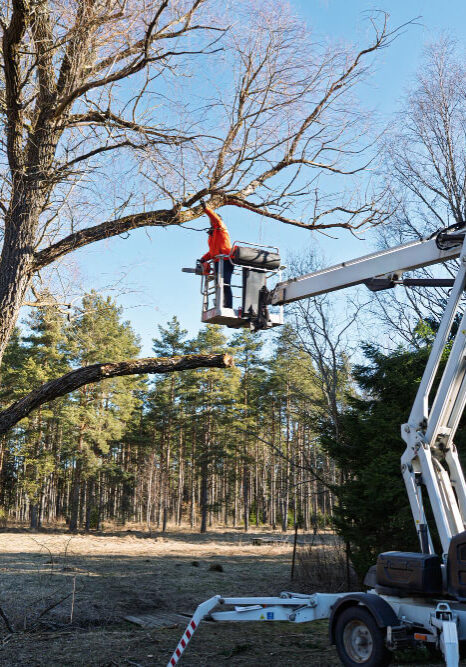
Visual Tree Assessment starts on the ground and moves up. I tap with a mallet, probe cavities, look for included bark, old pruning wounds with dark staining or exudate, and listen to the story the tree tells about past storms. If the evidence points to high failure potential where targets are unavoidable, Tree Removal Services may be the responsible recommendation. No one enjoys that discussion, but moving a grill or parking spot is not always an option, and liability is real. If removal is chosen, follow through with Stump Removal & Grinding where replanting or trip hazards are concerns, and select a replacement species and location better matched to the site and wind.
Emergency Tree Services and storm triage
After a wind event, priority shifts to safety. Downed conductors, hanging limbs over entrances, split leaders poised to fail, these situations call for Emergency Tree Services with trained crews familiar with tensioned wood and utility protocols. Storm damaged wood behaves unpredictably. A bent branch can store energy like a spring and release suddenly. I have cut what looked like a benign hanger only to watch it kick with enough force to dent a steel toolbox. If you are a property owner, create a perimeter, tape if you have it, and wait for professionals with the right gear and experience.
Once immediate hazards are neutralized, a second pass looks for salvageable structure. Not all https://israelfhmy140.trexgame.net/certified-arborist-consultation-soil-water-and-mulch-advice storm breaks mean a tree is lost. Reduction to a healthy lateral, cabling a cracked crotch, or staged rehabilitation over two or three seasons can return a valued tree to serviceable strength.
Fire and wind, one plan
In fire prone regions, FireSmart Tree Services intersect naturally with wind management. Spacing crowns to reduce ladder fuels also reduces the chance of branches interlocking and transmitting wind forces between trees. Removing deadwood of significant size lowers both ember catch and sail area. Pruning the lower third of conifers in the defensible space shifts weight up the stem slightly, which can increase wind loading on the trunk, so pair that work with selective tip reductions to moderate lever length. The key is to see the property as a system, fire and wind use different paths to create damage, yet many of the same structural choices mitigate both.
A practical homeowner checklist for wind ready trees
- Schedule a Certified Arborist Consultation every two to three years for mature trees, more often for fast growers. Keep mulch 5 to 8 cm deep out to the dripline where practical, never against the trunk. Watch for changes after storms, fresh cracks, soil heaving, or suddenly increased lean. Adjust irrigation to avoid chronically saturated or bone dry soils before storm seasons. Remove targets under known defects, move furniture, grills, or playsets out of the fall zone before high wind forecasts.
Timing your pruning with biology and weather
The best time to do substantial Tree Pruning & Crown Shaping varies. In cold climates, late winter is ideal for many species, reduced sap flow, better visibility, and less disease pressure. Spring bloomers that set flower buds on last year’s growth are a separate conversation for aesthetics, but from a structural standpoint the window is broad. Summer pruning has its place, particularly for slowing vigorous species or reducing end weight right before storm season. Avoid heavy pruning right after leaf out when the tree has just spent stored energy, and avoid making large cuts during peak disease vector periods for species prone to wilt or canker.
I build schedules around local patterns. In coastal regions with winter wind, finish structural adjustments by early fall so the tree can compartmentalize before the first gale. In interior zones with summer monsoons, plan end weight reductions in late spring. There is no one calendar that fits every town.
The craft details that separate tidy from strong
Tidy is not the same as strong. Cuts that make a crown look laced often strip interior foliage that dampens movement. What you want is a crown that looks slightly smaller, better proportioned, and unremarkable to the untrained eye. Interior shoots with good attachment and short length can be your friends. They act like shock absorbers, rubbing less than long tips and occupying space that would otherwise invite watersprout jungles.
When subordinating a limb, step down in two or three lateral jumps rather than one big cut when possible. This keeps photosynthetic area distributed and reduces the hormonal scream for epicormic sprouts. If you do trigger sprouting on a vigorous species, plan a follow up visit in the next growing season to thin and train that response into a denser, more resilient end.
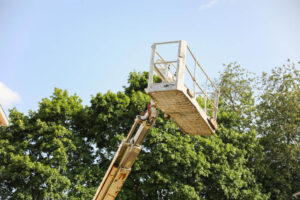
Gear matters. Sharp, clean blades make smaller, smoother wounds. On branches in the 5 to 10 cm class, a handsaw gives more control than a chainsaw. Use the three cut method for removals to avoid tearing bark. Tie in above your work when climbing so you are not cutting below your lanyard in ways that encourage overreach or awkward angles. These are small details that prevent both human and tree injuries.
Integrating support services into a long term plan
Most properties I manage get a simple plan that touches several services over time. The backbone is periodic Tree Pruning & Crown Shaping. Add Tree Cable and Bracing for those with structural defects worth managing. Keep Emergency Tree Services on speed dial for storm nights, because a quick tarp or a temporary rope tie to pull a cracked leader off a roof can save thousands before daylight work begins. Use Dangerous Tree Assessment and Removal for the cases where failure probability and target value leave no ethical room for wishful thinking. After removals, finish with Stump Removal & Grinding so replacement planting or hardscape repairs can proceed without tripping hazards or suckering.
The plan works best when anchored by a Certified Arborist Consultation at the outset and updated as trees grow and conditions change. Trees are living structures. They respond to pruning, weather, pests, and time. A note in the file that the south lead was reduced 1.5 meters in 2024, with a photo, informs the 2027 visit in practical ways.
A brief word on cost, value, and trade offs
Owners often ask how much pruning is enough. Sometimes the budget shapes the answer more than the perfect plan. If you can fund only part of the work this year, prioritize overextended limbs over targets and defects with poor unions. If a large pruning cut can be avoided by a small crown reduction two seasons in a row, spread it out. If a cable can buy a decade for a heritage tree while a new one grows into its role, that is money well spent.
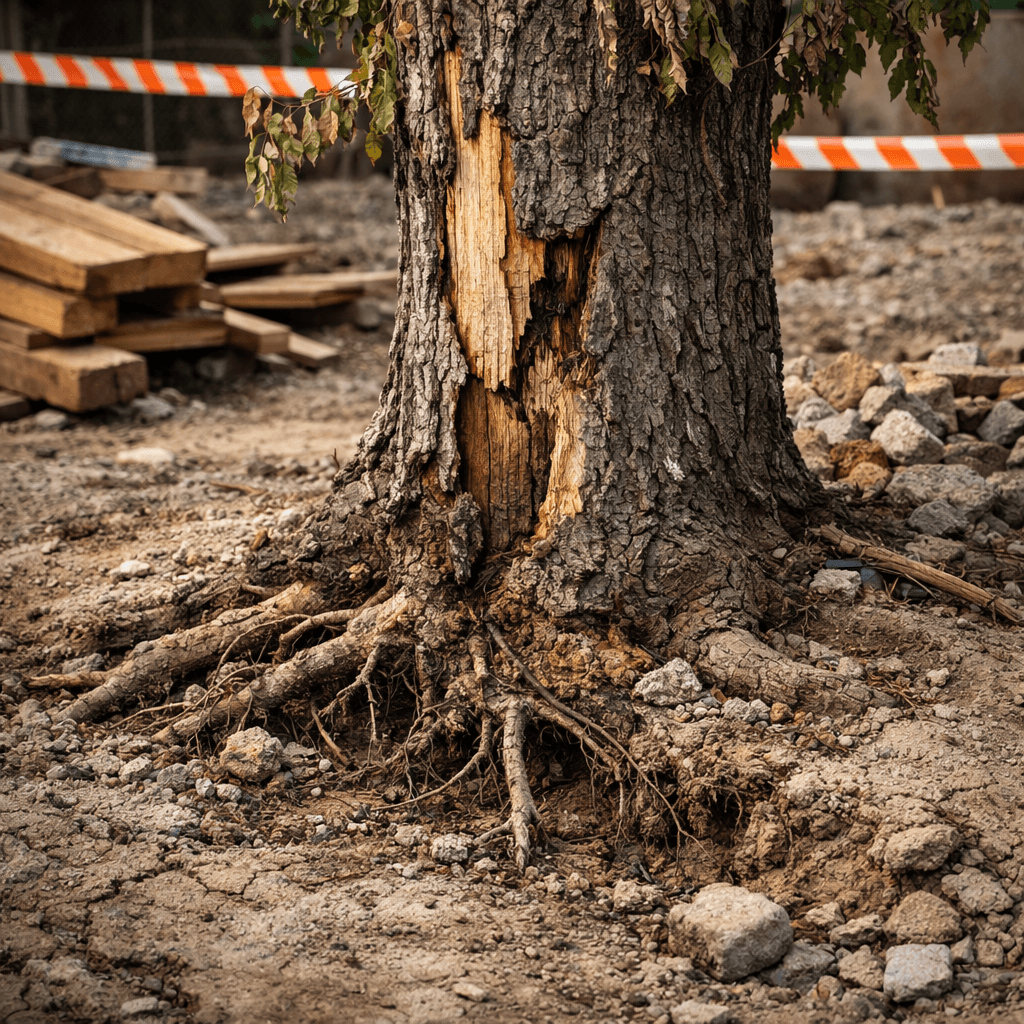
There are trade offs everywhere. Reducing sail area can increase light penetration, which may be a boon for turf and perennials but a risk for shade loving understory. Cabling preserves form but introduces maintenance obligations. Removing a risky tree eliminates a hazard, yet changes wind patterns for the remaining trees, sometimes exposing them. Each property needs a tailored approach rather than a formula.
Simple seasonal routine to stay ahead of storms
- Walk your property at the start of storm season, note changes since last year, and flag anything that looks new or worse. Book non urgent pruning in shoulder seasons, winter or early spring in cold zones, late spring for warm zones, to avoid the rush after storms. After high wind events, do a quick check for hangers, cracks, and soil heave, then call if something concerns you. Water deeply but infrequently during droughts, encouraging deep roots that anchor better. Keep a clear drop zone under large limbs during forecasted gales by moving portable targets for a night.
What failure looks like on paper and in the field
I remember a coastal spruce that leaned five degrees, then seven. The homeowner barely noticed until a nor’easter pushed it to ten. Soil on the compressed side bulged, and you could see fresh root plates lifting. Pruning would not fix roots already losing their grip in shallow, saturated soil. We chose removal, ground the stump, and in the fall planted three smaller, wind firm species, a serviceberry, a hawthorn, and a tupelo, set back farther from the slope edge. Two years later, those trees bent beautifully in a gale, their crowns low and balanced, and the yard felt safer and more alive than the day we met.
By contrast, a white oak with a long western limb over a barn asked for finesse, not a sawmill. The union was strong, but the lever long. We reduced the limb to two interior laterals, total tip reduction about 1.8 meters, and installed a dynamic cable to share load with the central leader. First storm after the work, the owner texted a video. The limb moved with the main stem, not against it. The barn roof stayed quiet.
Bringing it together
Wind resistance is not a single cut, a single visit, or a single product. It is a way of tending trees that respects physics, biology, and place. Good work often looks like restraint. Less removal, more intention. Shorter levers, stronger unions, healthier roots. When removal is the right call, make it clean and purposeful, and plant with a better match between tree and site. When a storm rolls over your neighborhood and you watch your trees flex and settle instead of thrash and break, the plan you built with your arborist will have earned its keep.
Ace Tree Services Ltd.
Name: Ace Tree Services Ltd.Address: 4656 Wallace Hill Road, Kelowna, BC
Postal code: V1W 4C2
Phone: 250-212-9593
Website: https://acetree.ca/
Hours:
Monday: 7:00 AM - 5:00 PM
Tuesday: 7:00 AM - 5:00 PM
Wednesday: 7:00 AM - 5:00 PM
Thursday: 7:00 AM - 5:00 PM
Friday: 7:00 AM - 5:00 PM
Saturday: 7:00 AM - 5:00 PM
Sunday: Closed
Open-location code (plus code): RHF8+8G Kelowna, British Columbia, Canada
Map/listing URL: https://www.google.com/maps/place/Ace+Tree+Services+Ltd./@49.8232606,-119.4337283,659m/data=!3m2!1e3!4b1!4m6!3m5!1s0x537d8b1d074815c5:0x450b88afa7a41435!8m2!3d49.8232606!4d-119.4337283!16s%2Fg%2F11ydkpnh22
Embed iframe:
"@context": "https://schema.org", "@type": "HomeAndConstructionBusiness", "name": "Ace Tree Services Ltd.", "url": "https://acetree.ca/", "telephone": "250-212-9593", "address": "@type": "PostalAddress", "streetAddress": "4656 Wallace Hill Road", "addressLocality": "Kelowna", "addressRegion": "BC", "addressCountry": "CA" , "openingHoursSpecification": [ "@type": "OpeningHoursSpecification", "dayOfWeek": "https://schema.org/Monday", "opens": "07:00", "closes": "17:00" , "@type": "OpeningHoursSpecification", "dayOfWeek": "https://schema.org/Tuesday", "opens": "07:00", "closes": "17:00" , "@type": "OpeningHoursSpecification", "dayOfWeek": "https://schema.org/Wednesday", "opens": "07:00", "closes": "17:00" , "@type": "OpeningHoursSpecification", "dayOfWeek": "https://schema.org/Thursday", "opens": "07:00", "closes": "17:00" , "@type": "OpeningHoursSpecification", "dayOfWeek": "https://schema.org/Friday", "opens": "07:00", "closes": "17:00" ], "geo": "@type": "GeoCoordinates", "latitude": 49.8232606, "longitude": -119.4337283 , "hasMap": "https://www.google.com/maps/place/Ace+Tree+Services+Ltd./@49.8232606,-119.4337283,659m/data=!3m2!1e3!4b1!4m6!3m5!1s0x537d8b1d074815c5:0x450b88afa7a41435!8m2!3d49.8232606!4d-119.4337283!16s%2Fg%2F11ydkpnh22"
Ace Tree Services Ltd. provides professional tree removal, pruning, stump grinding, emergency response, and arborist consultations for properties in Kelowna and across the Okanagan Valley.
The company works with homes, commercial properties, and municipal settings where tree work needs to be planned carefully around buildings, fences, driveways, landscaping, and other site constraints.
Based in Kelowna, the team is positioned to help nearby neighbourhoods and surrounding Okanagan communities with routine tree care and time-sensitive storm cleanup.
Customers looking for careful tree work often want a crew with certified arborist training, insurance, and a methodical approach to higher-risk removals.
Services also include dangerous tree assessment, cabling and bracing, and wildfire risk reduction tree work for properties that need longer-term planning.
To request a quote or discuss tree care options, call 250-212-9593 or visit https://acetree.ca/.
A public map listing is available to help customers confirm the business location and get directions before a site visit or estimate.
For Kelowna property owners who need pruning, removals, or emergency tree help, a local tree service can make it easier to schedule site-specific recommendations and cleanup.
Popular Questions About Ace Tree Services Ltd.
What services does Ace Tree Services Ltd. provide?Ace Tree Services Ltd. lists tree removal, stump removal and grinding, tree pruning and crown shaping, emergency tree service, arborist consultation, dangerous tree assessment and removal, cabling and bracing, and wildfire risk reduction tree work.
Who does Ace Tree Services Ltd. serve?
The company describes its work as serving homes, businesses, and municipalities in Kelowna and across the Okanagan Valley.
Is emergency tree help available?
Yes. Emergency service is listed for downed or uprooted trees, dangerous tree assessment, stabilization work, and branch cleanup. If a tree is near power lines, the safest first step is to stay clear and contact the utility provider before any tree work begins.
Do I always need a permit to remove a tree?
Not always. Permit requirements can depend on where the tree is located and whether it is near a creek, lake, steep slope, or another protected area. It is best to check local rules for the specific property before removal work starts.
How deep does stump grinding usually go?
Standard stump grinding is typically described as going about 6 to 12 inches below ground level, which is often enough for grass or surface landscaping. Deeper grinding may be possible when site plans call for it.
How much of a tree can be safely removed at one time?
That depends on the species, age, health, and structure of the tree. In practice, good pruning is usually about removing the right limbs for health, clearance, and structure rather than chasing a fixed percentage.
What are common signs that a tree may be dangerous?
Large dead limbs, visible cracks, a new lean, root damage, canopy dieback, or storm-related damage can all be warning signs. Trees near structures deserve extra attention when any of those issues appear.
What is cabling and bracing in tree care?
Cabling and bracing are support systems used to reduce the risk of failure in trees with structural weaknesses that may still be worth preserving. They are generally used to add support, not to replace good assessment and ongoing maintenance.
How do I contact Ace Tree Services Ltd.?
Call 250-212-9593.Website: https://acetree.ca/.
Landmarks Near Kelowna, BC
Downtown KelownaThe downtown core is a practical reference point for lakefront neighbourhoods, mixed-use streets, and central residential properties. If your property is near downtown, tree pruning, removals, and cleanup can be planned around tighter access and nearby structures.
Knox Mountain Park
This well-known park north of downtown is a recognizable landmark for nearby homes and hillside properties. If you are close to this area, ask about tree assessment, trimming, or removal work suited to sloped sites.
Mission Creek Greenway
The greenway runs through several parts of Kelowna and is a useful landmark for nearby residential areas. If your property borders or sits near this corridor, site-specific tree planning is especially important.
Pandosy Village
Pandosy is one of Kelowna’s most recognizable neighbourhoods and a common reference point for south-central properties. If you are nearby, request help for pruning, removals, or storm cleanup around homes and small commercial sites.
Rutland
Rutland is a major east Kelowna neighbourhood with a mix of residential and local commercial properties. If you are located in or near Rutland, tree work can be scheduled for both routine maintenance and urgent situations.
Landmark District
This central business-focused area is a practical landmark for offices, service properties, and nearby residential streets. If your site is near the district, ask about careful tree work around parking, access lanes, and built-up lots.
Kelowna’s North End
The North End sits on the edge of downtown and is a useful reference for nearby homes, industrial sites, and commercial properties. If you are in this part of the city, request tree care based on the layout and constraints of the lot.
Airport District
The Airport District is a recognizable north Kelowna reference point for surrounding properties and access routes. If you are in this area, ask about tree services for residential acreage, commercial sites, or roadside cleanup needs.
Glenmore & Dilworth
These established Kelowna neighbourhoods are useful landmarks for central and north-central service calls. If your property is nearby, pruning and removal work can be tailored to mature trees and established landscapes.
Highway 97 Corridor
Highway 97 is one of the city’s main travel routes and a common way to describe location within Kelowna. If your home or property is just off the corridor, a clear landmark reference can help speed up quote scheduling and site planning.